Solytics Partners Secures a Trifecta of Wins at the Economic Times Enterprise AI Awards 2026

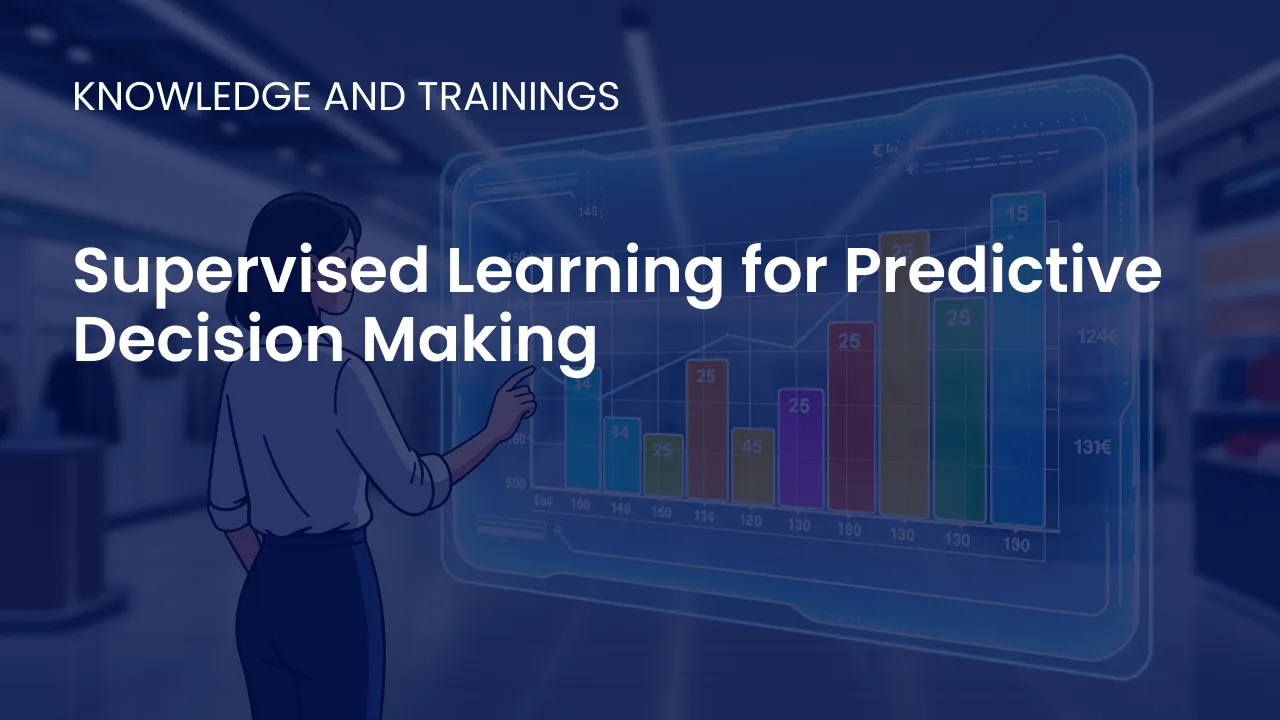
Supervised Learning
What is Supervised Learning?
Supervised Learning is a machine learning approach in which models are trained using labeled data. Each data point includes an input and an associated correct output, allowing the system to learn the relationship between them. Once trained, the model can make predictions or classifications when presented with new, unseen data. Supervised learning is among the most widely used techniques in data-driven decision-making and analytical applications.
How Supervised Learning Works
The supervised learning process begins with collecting and preparing a labeled dataset. The model is trained by repeatedly comparing its predictions with the actual labels and adjusting its internal parameters to reduce errors. This iterative learning helps the model generalize patterns and improve its accuracy. After training, the model is evaluated using test data to ensure it performs well before being deployed in real-world scenarios.
Types of Supervised Learning
- Classification: Classification techniques categorize data into predefined classes. Examples include identifying fraudulent transactions, predicting customer churn, and classifying emails as spam or non-spam.
- Regression: Regression techniques predict numerical values based on input variables. Common examples include forecasting sales, estimating credit risk scores, and predicting property prices.
Benefits of Supervised Learning
- High Predictive Accuracy: When provided with strong and well-labeled datasets, supervised learning models deliver precise and reliable predictions.
- Clear Objective: Since outputs are labeled, the learning process is structured and easier to evaluate.
- Broad Industry Adoption: Many business problems can be framed as classification or regression tasks, making supervised learning highly applicable across industries.
- Interpretability: Some supervised learning models, such as decision trees and linear regression, offer transparency and explain how predictions are made.
Challenges in Supervised Learning
- Need for Labeled Data: Creating and curating labeled datasets can be expensive, time consuming, and resource intensive.
- Risk of Overfitting: Models may memorize the training data instead of learning general patterns, leading to poor performance on new inputs.
- Bias in Data: If labeled data is imbalanced or biased, the model may produce skewed or unfair outcomes.
- Scalability Issues: Large and complex datasets require significant computational power to train high performing supervised models.
Applications of Supervised Learning
Supervised learning powers many real-world use cases such as fraud detection, sentiment analysis, medical diagnosis, loan approval, demand forecasting, and customer segmentation. Its ability to learn direct input-output relationships makes it a core method for predictive analytics and intelligent automation.
Conclusion
Supervised Learning remains one of the most effective and practical approaches in machine learning. By leveraging labeled data, organizations can build models that enhance decision-making, improve accuracy, and automate critical processes. While challenges exist in data labeling, fairness, and scalability, supervised learning continues to underpin many advanced AI solutions across modern industries.









































































.svg)


