Solytics Partners Secures a Trifecta of Wins at the Economic Times Enterprise AI Awards 2026

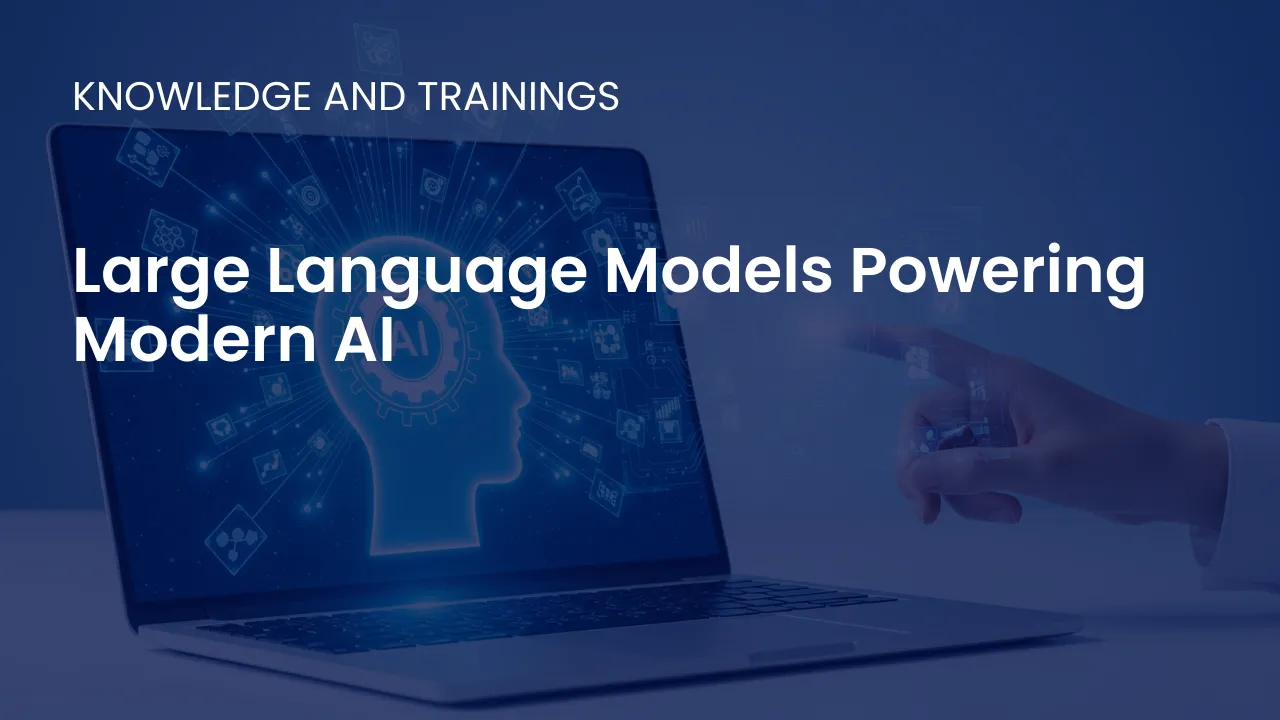
Large Language Model (LLM)
What is a Large Language Model?
A Large Language Model is an advanced type of artificial intelligence designed to understand, interpret, and generate human language. LLMs are trained on vast amounts of text data, which enables them to recognize linguistic patterns, answer questions, draft content, summarize information, and engage in natural conversations. Their ability to process context and produce coherent text makes them valuable across a wide range of applications.
How Large Language Models Work
LLMs rely on deep learning architectures that use multiple layers of neural networks to analyze and generate language. During training, the model learns how words and sentences relate to each other. This helps it predict the most relevant next words and craft meaningful responses. Modern LLMs use transformer-based structures that focus on attention mechanisms, allowing them to understand context, intent, and relationships within long pieces of text.
Core Capabilities of LLMs
- Natural Language Understanding: LLMs can interpret user queries, extract important information, and identify the intent behind a message.
- Content Generation: They produce well-structured text for articles, emails, reports, and chat-based interactions.
- Summarization: LLMs can condense long documents into concise summaries without losing essential meaning.
- Translation: Many LLMs support multilingual translation by recognizing patterns across different languages.
- Reasoning and Analysis: They can analyze text, identify patterns, and help with tasks such as classification or sentiment analysis.
Benefits of Large Language Models
- Enhanced Productivity: LLMs automate writing tasks, reduce manual effort, and support teams across documentation, communication, and research activities.
- Improved Decision Support: By processing large volumes of text, LLMs help extract insights that guide business and operational decisions.
- Versatility: LLMs can be applied across sectors such as customer support, education, finance, healthcare, and technology.
- Consistency: They generate consistent outputs, helping organizations maintain clarity and accuracy in communication.
Challenges in Using LLMs
- Inaccuracy and Hallucination: LLMs may generate incorrect or fabricated information if the input is unclear or the model is not fine-tuned.
- Data Privacy Considerations: Handling sensitive or confidential inputs requires strong governance and security practices.
- Computational Requirements: Training and deploying LLMs demand significant infrastructure and specialized expertise.
- Bias and Fairness: If the training data contains biases, the model may reflect them in its outputs.
Applications of Large Language Models
Organizations use LLMs for customer service automation, knowledge management, content creation, compliance support, data analysis, and digital assistants. They help streamline workflows, improve accuracy in documentation, and enhance user engagement across digital platforms.
Conclusion
Large Language Models represent a major advancement in natural language technologies. Their ability to understand and generate high quality text enables businesses to operate more efficiently and deliver better digital experiences. Although challenges related to accuracy, governance, and fairness must be addressed, LLMs continue to drive innovation and remain a central component of modern AI solutions.

























































.svg)


